University of Minnesota
Client
University of Minnesota – Twin Cities
Industry
Colleges & Universities
Our Role
Develop an actionable and realistic Zero Waste Plan
The Challenge
Roadmap to Zero: A Comprehensive Waste Diversion Strategy for the University of Minnesota – Twin Cities
The University of Minnesota – Twin Cities needed a detailed and coordinated roadmap to achieve its ambitious goal of diverting 90% of campus waste from disposal across a large, complex, and evolving university environment. With approximately 300 buildings spread across a 1,400-acre campus and a population of more than 54,000 students, the University faced the challenge of advancing zero waste in a setting with diverse building types, operational needs, and material streams.
While the University had already made meaningful progress through Facilities Management – Waste Recovery Services, including operation of a campus materials recovery facility and the ReUse Warehouse, overall diversion had plateaued at approximately 52%. UMN required a comprehensive evaluation of existing systems to understand where barriers, inefficiencies, and missed opportunities were limiting progress. Their efforts needed to move beyond infrastructure and operations to align policies, procurement practices, education, and engagement in order to create consistent, campus-wide adoption of zero waste practices. The main goals and considerations were:
Complex Materials Management Systems: Assessing a wide range of collection, processing, and reuse systems serving research, residential, dining, and event spaces.
Program Alignment and Policy Gaps: Identifying opportunities to strengthen policies, procedures, and governance to better support waste reduction, reuse, recycling, and organics programs.
Stakeholder Coordination and Engagement: Integrating perspectives from Facilities Management, sustainability leadership, students, faculty, and staff to ensure recommendations were realistic, equitable, and implementable.
Implementation and Communication: Translating technical findings into clear, phased actions and a coordinated communications framework that could support campus-wide adoption and long-term cultural change.
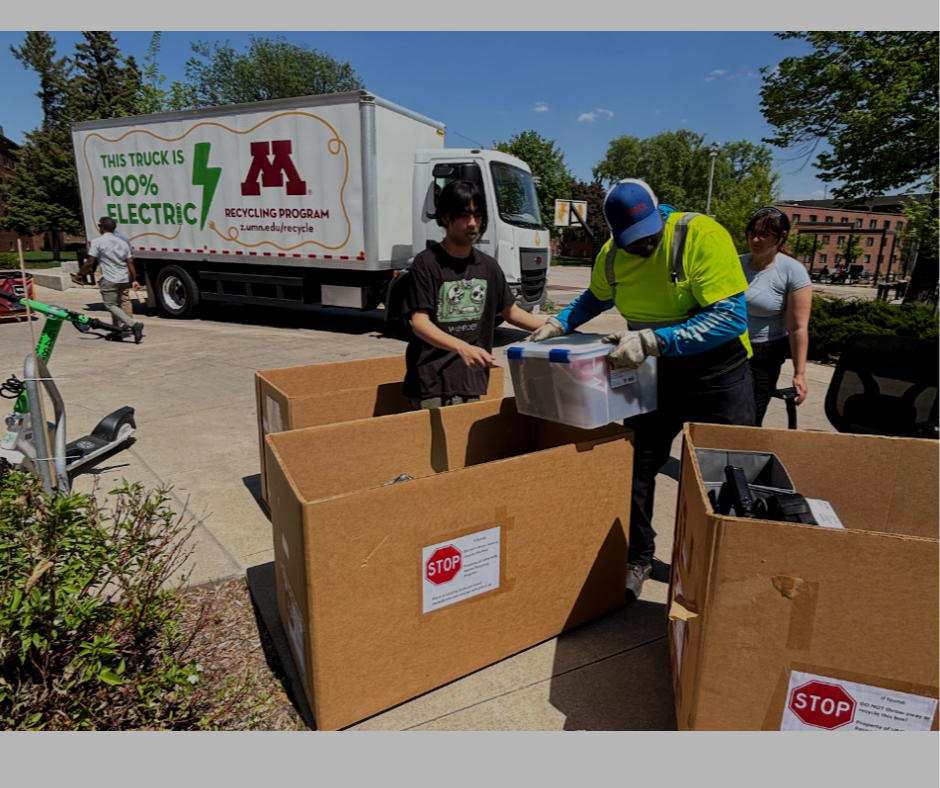
"This plan reflects a groundswell of student advocacy for meaningful action around zero waste initiatives and creation of a resilient campus community."
-University of Minnesota – Twin Cities’ Zero Waste Plan
Strategic Approach
Our strategic, systems-based approach delivered a comprehensive and implementable Zero Waste Plan to guide the University of Minnesota – Twin Cities toward its goal of 90% waste diversion.
The work combined on-the-ground assessments, stakeholder engagement, and best practices in materials management to translate complex campus operations into clear, phased actions that could be implemented over time.

System Assessment & Gap Analysis: Conducted campus-wide site assessments and a comprehensive gap analysis to evaluate existing waste reduction, reuse, recycling, and organics programs, infrastructure, policies, and operational practices. This analysis identified barriers, redundancies, and high-impact opportunities across research, residential, dining, and event settings.

Stakeholder Engagement: Engaged key stakeholders to validate findings, understand operational realities, and incorporate diverse perspectives into the plan’s recommendations. Stakeholder input informed both the prioritization of strategies and the feasibility of implementation.

Strategy Development & Phased Implementation: Synthesized gap-analysis findings, stakeholder feedback, and best practices into phased implementation strategies that built on existing infrastructure, strengthened policies and procedures, expanded education and outreach, and enhanced programs such as large-event waste reduction and the ReUse Warehouse.

Communications Roadmap: Developed a comprehensive communications roadmap to connect all elements of the plan, aligning operational recommendations, policy direction, and engagement efforts. The roadmap provided a coordinated framework to support consistent messaging, campus-wide participation, and sustained progress toward zero waste.
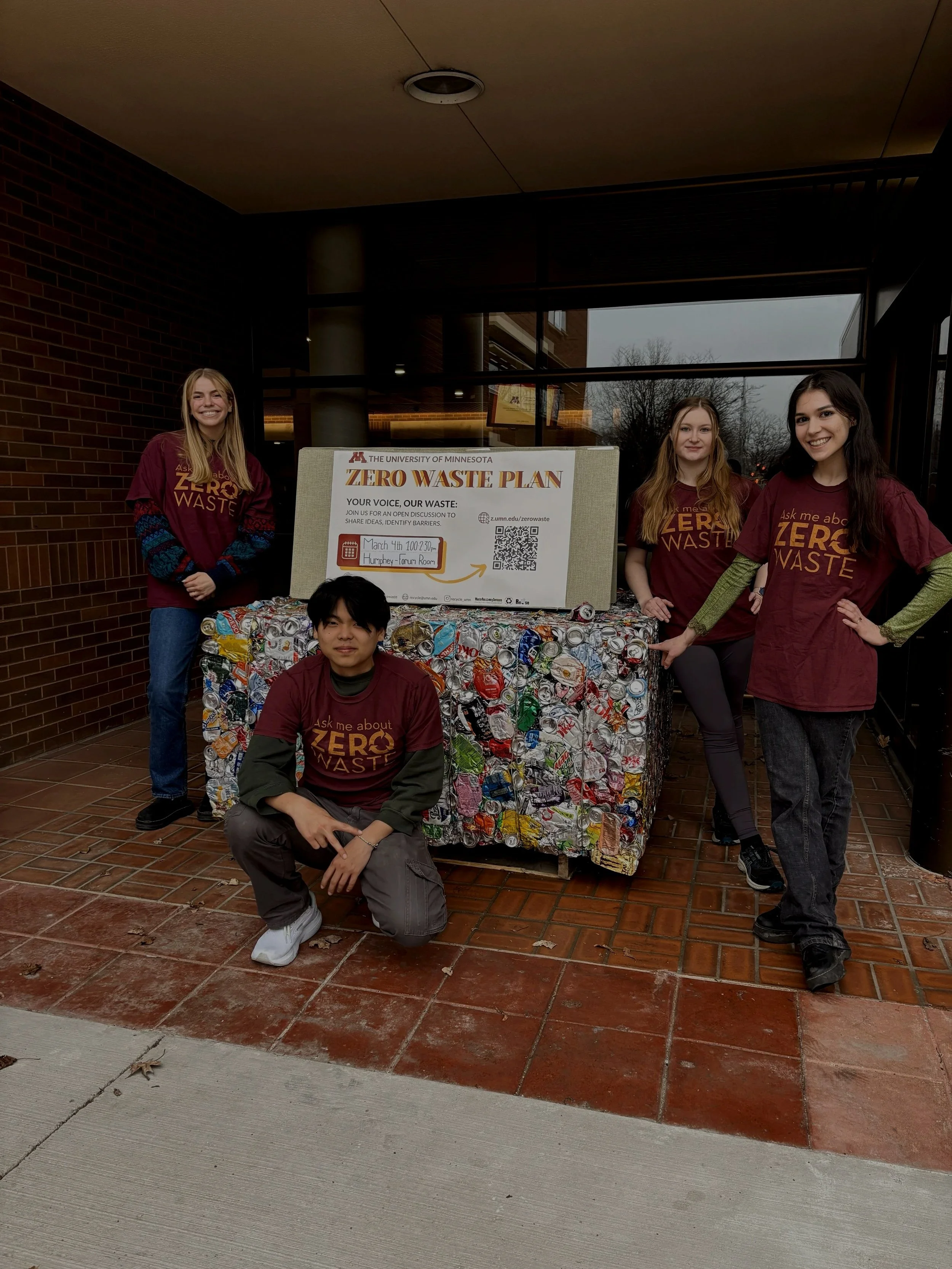
Approximately 9,500 tons of material is generated annually throughout campus, from academic and administrative buildings to research labs and athletic facilities, and are produced by students, staff, faculty, and members of the broader Twin Cities community who visit the campus.
Outcomes
Advancing Zero Waste at the University of Minnesota – Twin Cities
RRS delivered the University of Minnesota – Twin Cities’ first comprehensive Zero Waste Plan, providing a clear and coordinated framework to advance the University’s goal of achieving 90% diversion by 2030. Grounded in gap-analysis findings, stakeholder input, and best practices, the plan translated complex operational realities into actionable strategies that strengthened existing programs, aligned policies and procedures, and supported campus-wide participation in zero waste efforts.
Key outcomes of the project included:
Phased Implementation Strategies: Developed a structured, multi-phase roadmap that prioritized actions over time, building on existing infrastructure while identifying resource needs and opportunities to expand waste reduction, reuse, recycling, and organics programs as the University progresses.
Communications Roadmap: Created a comprehensive communications and outreach roadmap that connected operational recommendations, policy direction, and engagement efforts into a cohesive framework, supporting consistent messaging, education, and long-term cultural change across campus.
Policy and Procurement Alignment: Informed the development and strengthening of policies and procedures including sustainable procurement strategies which reduce waste upstream, improve material control on campus, and align operational practices with broader sustainability goals.
Together, these outcomes positioned the University with a practical, values-driven path forward, one that centers reuse, recycling, composting, and waste reduction; supports informed decision-making; and empowers students, faculty, and staff to participate in a shared zero waste vision. The plan established a durable foundation for continued progress, enabling UMN to better manage materials, reduce long-term costs, and demonstrate leadership in sustainability within higher education.
52%
Current campus diversion rate
90%
Campus-wide waste diversion goal
556
Community survey responses
54,000
Annual student enrollment
The Team
A skilled team from RRS worked closely with the University of Minnesota – Twin Cities to develop an actionable and realistic Zero Waste Plan using a systems-based approach.