
Textile Recovery
SPECIAL INITIATIVE
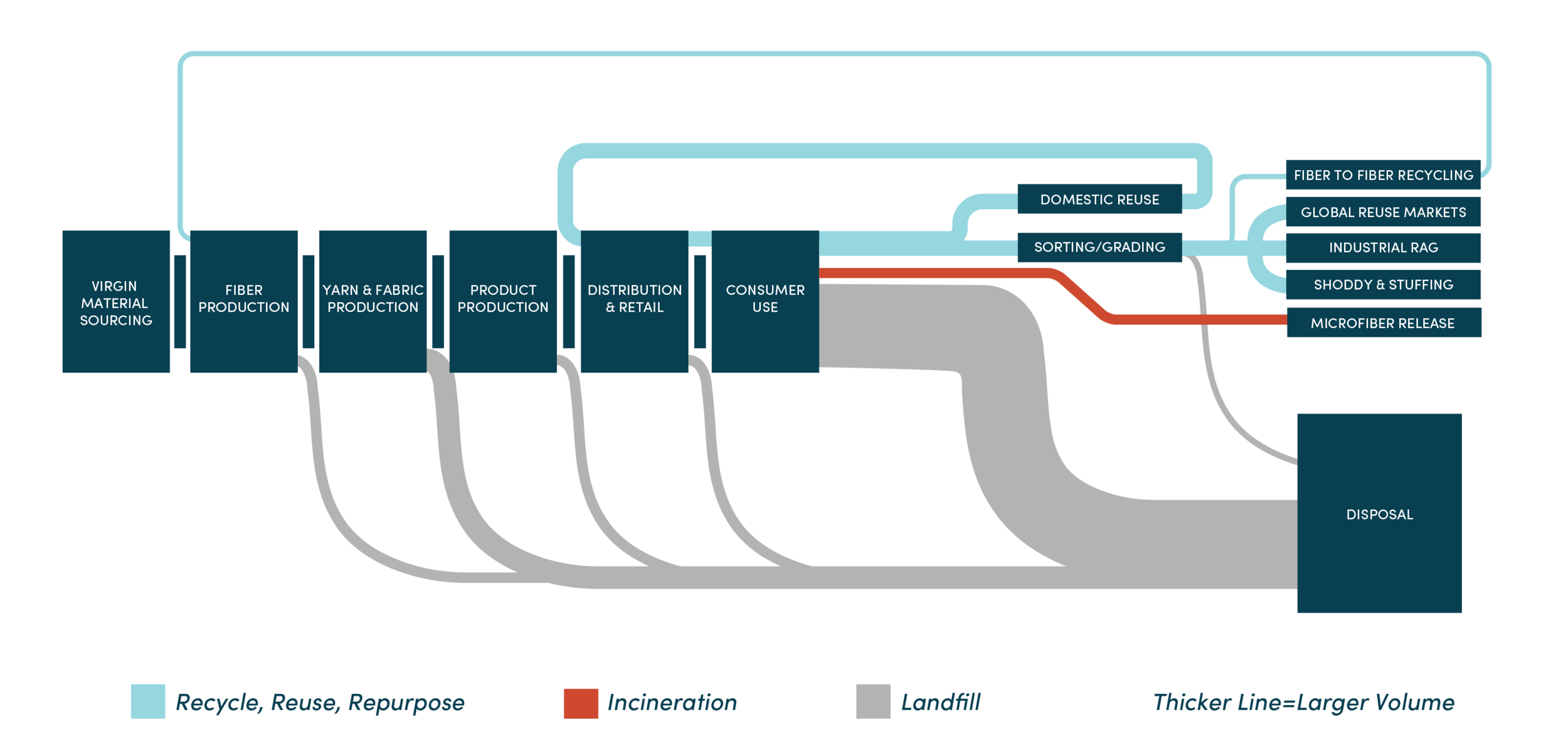
84% of textile waste is sent to landfills at a cost of $3.7 billion.
A majority of this unprecedented growth in textile waste is driven by fast fashion and consumer behavior. Fashion cycles – from catwalk to retailer – move at lightning speed with multiple cycles per year. Add on the fact that our culture is steeped in rapid consumerism and you end up with disposable clothing.
The waste stream is evolving.
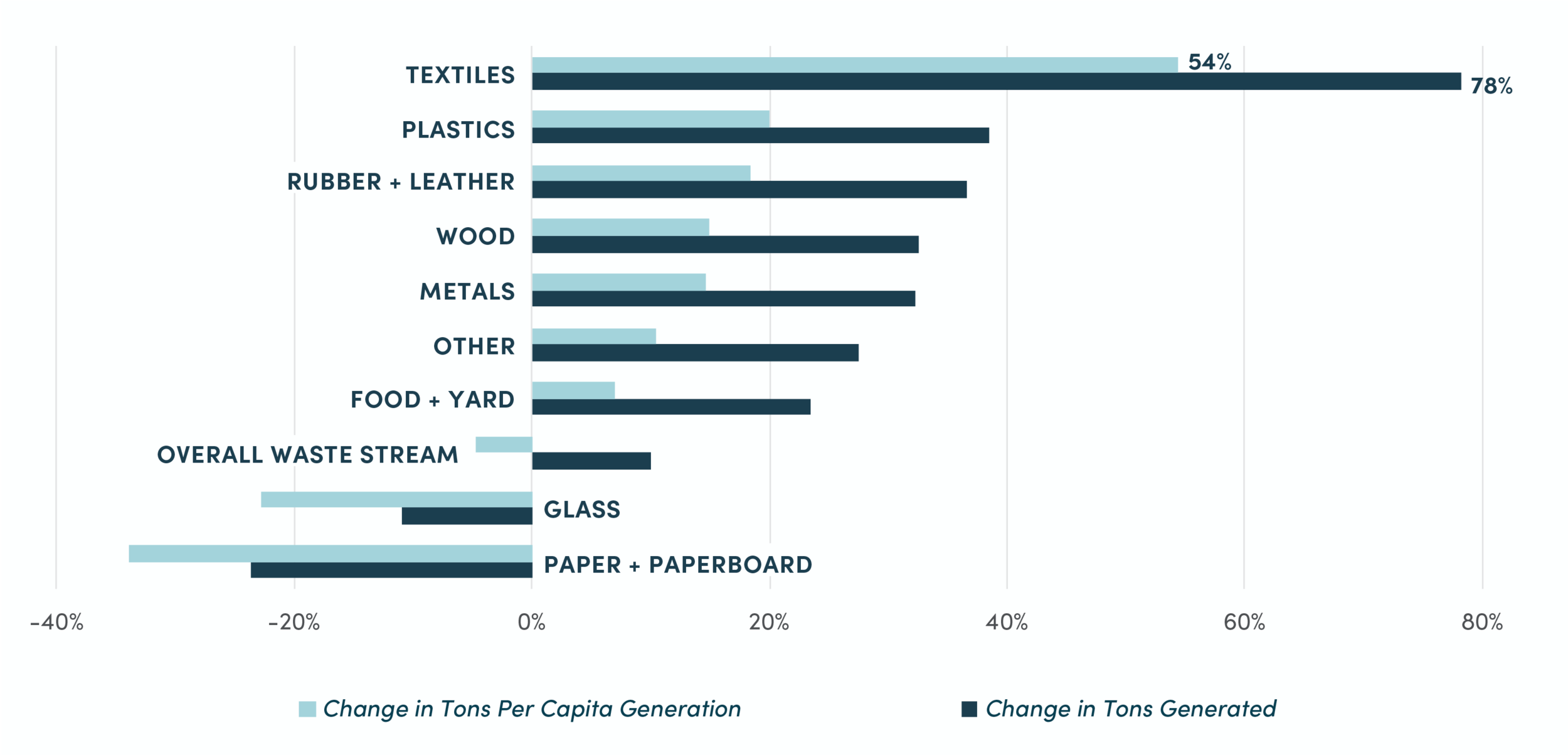
The good news is that per capita waste generation, on a mass basis, has decreased compared to 2000. However, two waste streams with some of the lowest overall recovery rates show the highest increases in per capita generation rates since 2000: textiles (15.5% recovery rate) and plastics (8.3% recovery rate). Clearly, we still have work to do if we are to build a bridge to the circular economy in the U.S.
PERCENT CHANGE IN ABSOLUTE TONS AND TONS PER CAPITA WASTE GENERATION 2000-2017
TEXTILE & APPAREL FLOWS IN THE U.S.
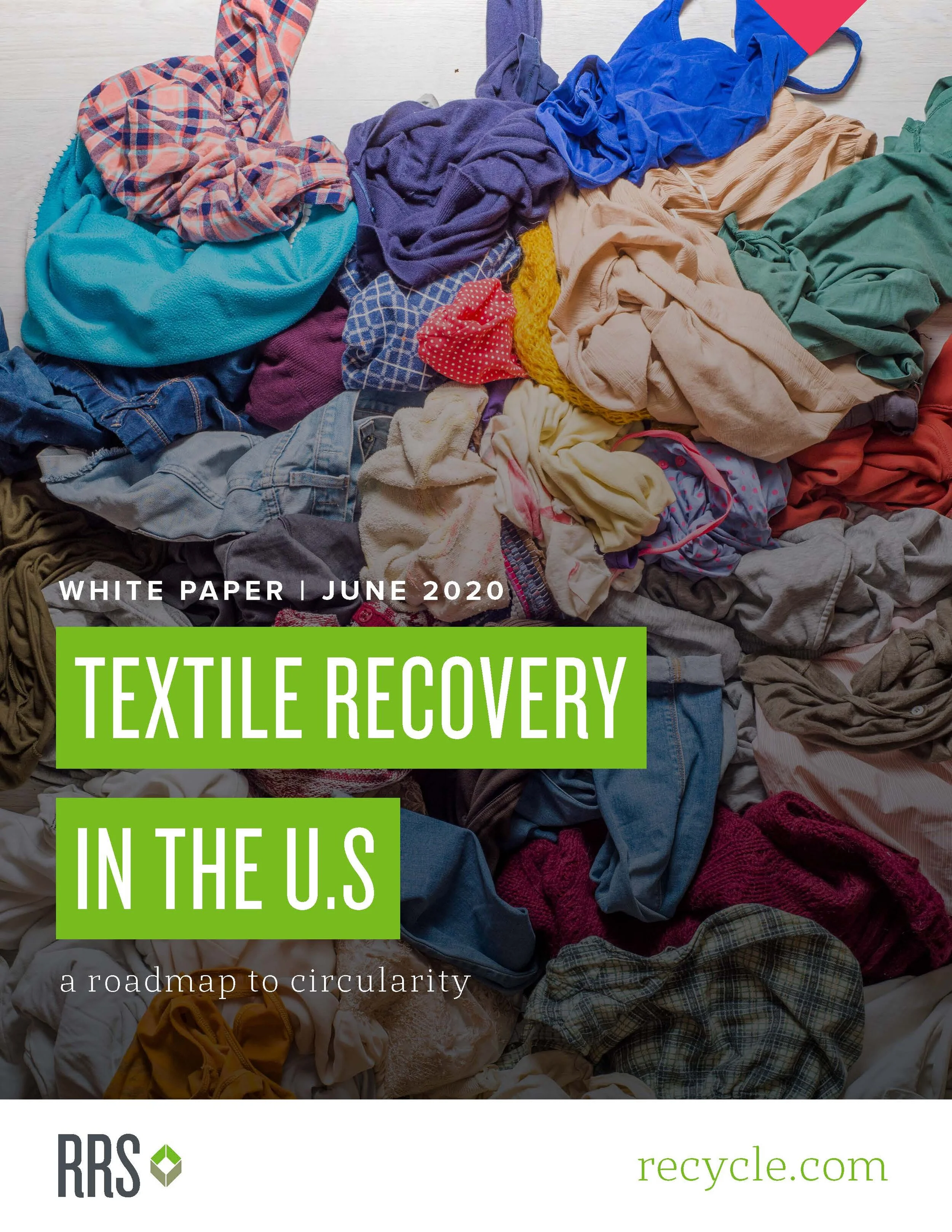
Download our free white paper today:
Textile Recovery in the US: A Roadmap to Circularity
The growth of textile waste in the United States is outpacing the growth of every other major category of waste. This report evaluates the current state of textile waste in the U.S. waste stream and explores a future-state system in which textiles are maintained in best and highest use throughout the value chain.
Solving for textile waste in the United States can have a measurable global impact on the upstream investment of human and natural capital like oil, cotton, energy, water, and chemicals used to make textile products. Building systems to recover textiles requires strategic partnerships from across the recovery value chain. This paper outlines the essential elements of an ideal recovery system and describes a way forward to a circular textile economy.
Get Involved
RRS is working with designers, brands, retailers, haulers, municipalities, mechanical and chemical recyclers, advanced recycling technologies, collaborative initiatives, and trade/industry groups. Below are some of our services related to understanding and improving textile recycling.
Textile Waste Audits
Fiber Characterization Studies
Waste Flow Evaluations & Waste Mapping
Textile MRF Design
Sorting Equipment & Sort Testing
Bale Specification Development
Fiber-to-fiber End Market Development
Sourcing Studies & Feedstock Analyses
Economic Feasibility & Cost Modeling
Value Proposition & Opportunity Statement Development
Communications, Outreach & Training
This list is not all inclusive, our research and planning is customized to each client. Connect with us today to discuss how RRS can help you improve textile recovery.