
Setting the Bar for EPR Implementation
AWARD-WINNING PARTNERSHIP BETWEEN RRS AND CAA SETS NEW STANDARD FOR EPR POLICY IMPLEMENTATION
When Oregon passed one of the country’s first statewide Extended Producer Responsibility (EPR) laws for packaging and paper products, it did more than call for compliance. It required coordination, accuracy, and bold solutions. Circular Action Alliance (CAA) turned to RRS to help deliver the technical foundation for the framework that would shape Oregon’s recycling future.
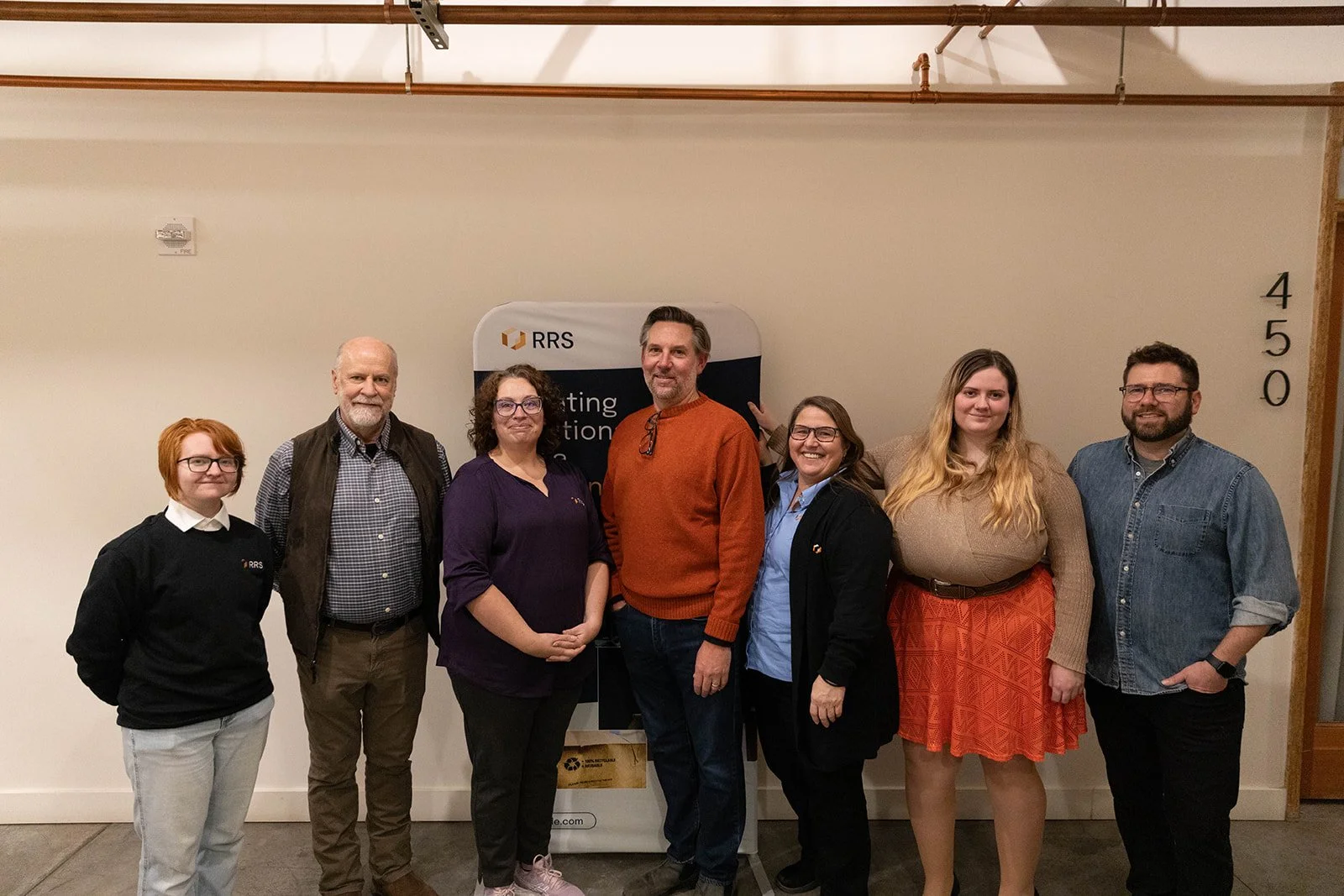
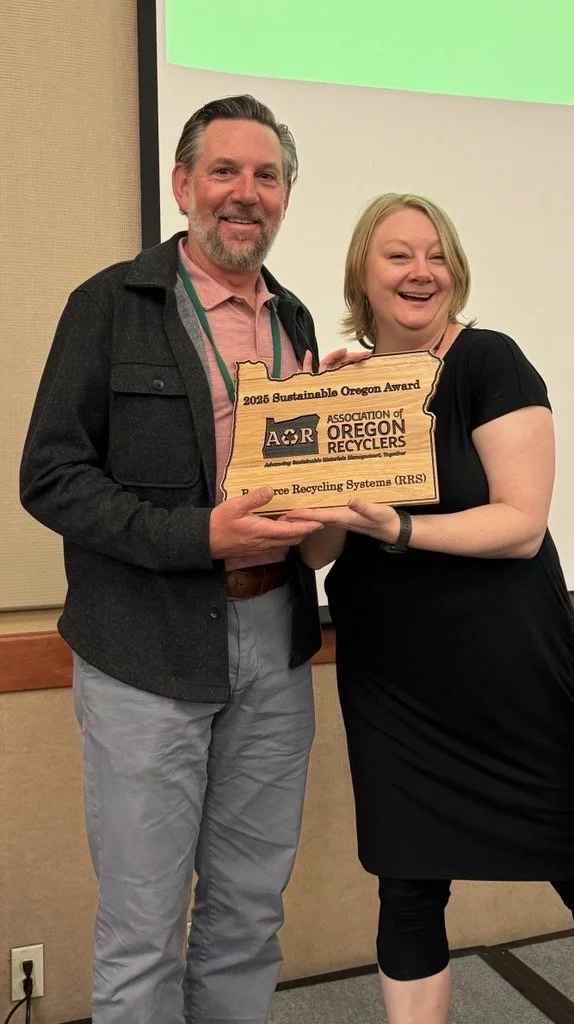
In recognition of that collaboration, CAA nominated RRS for the Association of Oregon Recyclers’ Innovator of the Year award, an honor that highlights the strength of the partnership and the impact of the work. We’re grateful for the opportunity to support CAA and proud to contribute to a plan that advances Oregon’s recycling system.
Working Across the State
To develop a system that would serve all Oregonians, the team had to reach every corner of the state. That meant gathering system-level data from more than 240 local governments and coordinating with every wasteshed in Oregon.
RRS helped lead engagement efforts that prioritized equity, trust, and follow-through, resulting in participation from more than 85 percent of jurisdictions. That groundwork created a shared vision of what is needed to build a stronger, more equitable recycling system for the state.
“This project wasn’t just an exercise in data collection. It was a masterclass in stakeholder engagement. RRS brought together local governments, rural communities, service providers, and advocacy groups, achieving an astounding rate of 85% participation rate statewide. Their model ensured not only equity in recycling access, but equity in the conversation.”
— Kim Holmes, CAA Oregon Executive Director
Turning Insight Into Action
Every step of the plan was built on evidence, not assumptions. The team at RRS collected data from over 400 detailed surveys and follow-up interviews with municipalities, haulers, and other service providers. That information fed into a comprehensive database that assessed existing infrastructure, identified system gaps, modeled investment needs, and prioritized optimization strategies for successful EPR implementation.
By focusing on transparency and accuracy, RRS helped CAA and Oregon DEQ define a clear path forward—one that could meet regulatory requirements while earning stakeholder confidence. In addition, RRS’s modeling significantly reduced projected implementation costs and clarified where investments would have the greatest system-wide impact.
“This was one of the most comprehensive infrastructure inventory efforts ever done in the U.S., and it was built on relationships. We’re proud to have played a role in shaping a system that reflects Oregon’s values and meets its goals.”
— Joel Schoening, RRS Senior Consultant
Real Impact, Real Momentum
The result is a full system optimization strategy that lays out how producers will fund recycling programs, how underserved areas will receive improved service, and how Oregon can lead the country with a model of collaborative, modern recycling policy.
While the final statewide plan was authored by CAA, it was grounded in the data and analysis RRS delivered—providing a strong technical and strategic foundation for implementation.
It is a strategy grounded in lived conditions, shaped by local input, and ready to scale.
Living our Values
The Innovator of the Year award reflects the complexity and care that went into this work, as well as the kind of collaboration it takes to drive real systems change. It’s not just about the outcome, but the process: listening to stakeholders, navigating technical challenges, and designing for long-term impact. For RRS, this recognition is a milestone that affirms the value of pairing deep technical expertise with thoughtful, human-centered design. It underscores our belief that innovation in sustainable materials management must be rooted in both rigor and empathy.

See the Oregon Project in Action
This award-winning plan set a new benchmark for how Extended Producer Responsibility can work in practice—combining deep technical expertise with statewide engagement and equity-centered design.