
A Symbol Is Only as Strong as the System Behind It
Why PR3’s Global Reuse Symbol Matters
For decades, the chasing-arrows symbol has helped people associate packaging with recycling. The Reuse Symbol needed to be more.
As reusable packaging systems expand, the Global Alliance to Advance Reuse (PR3) is working to build on those lessons. RRS recently spoke with PR3 Co-founder and Director Amy Larkin and PR3 representative Suz Okie about the organization's new global reuse symbol, the standards behind it and what it could mean for brands, retailers, institutions and communities.
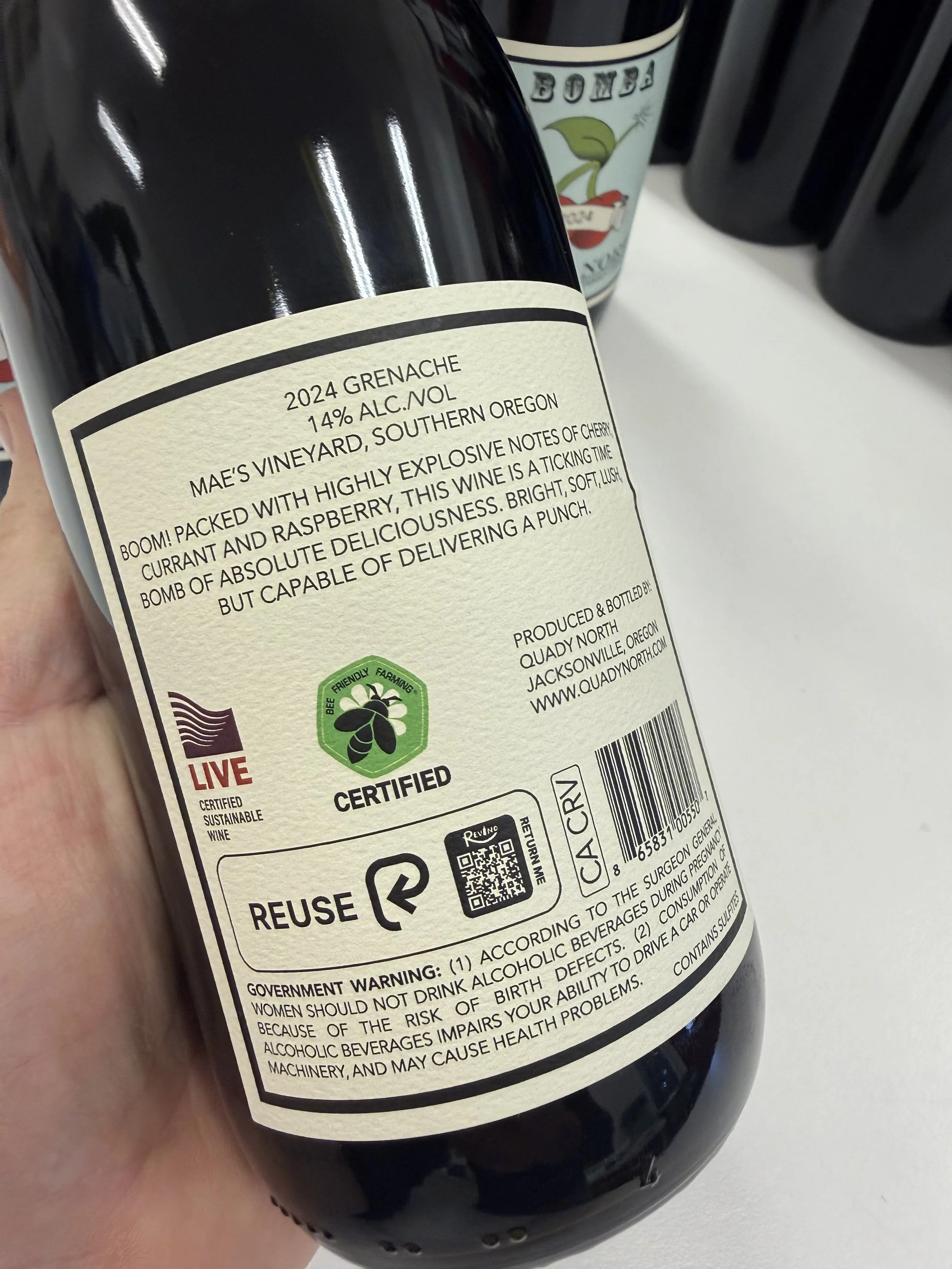
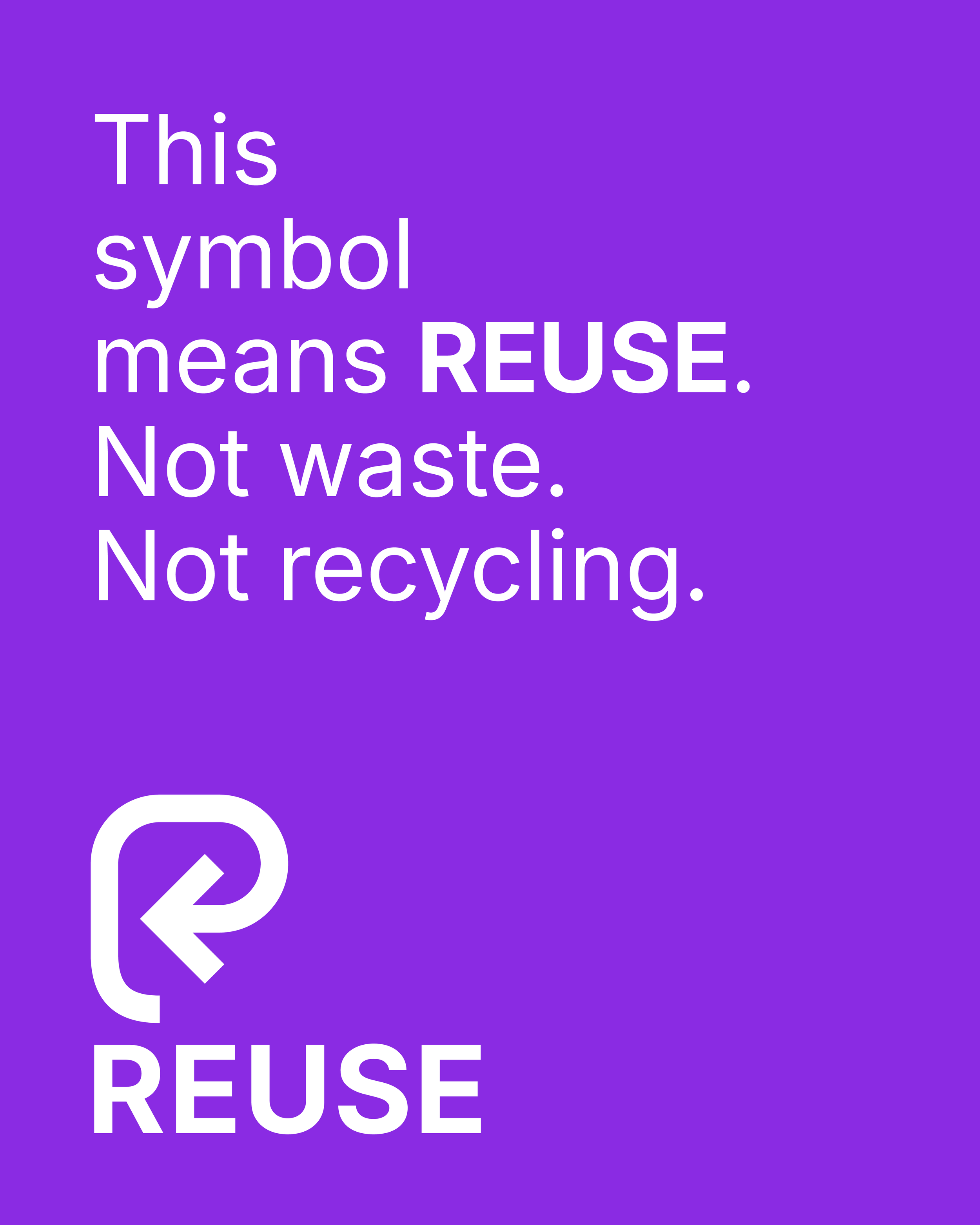
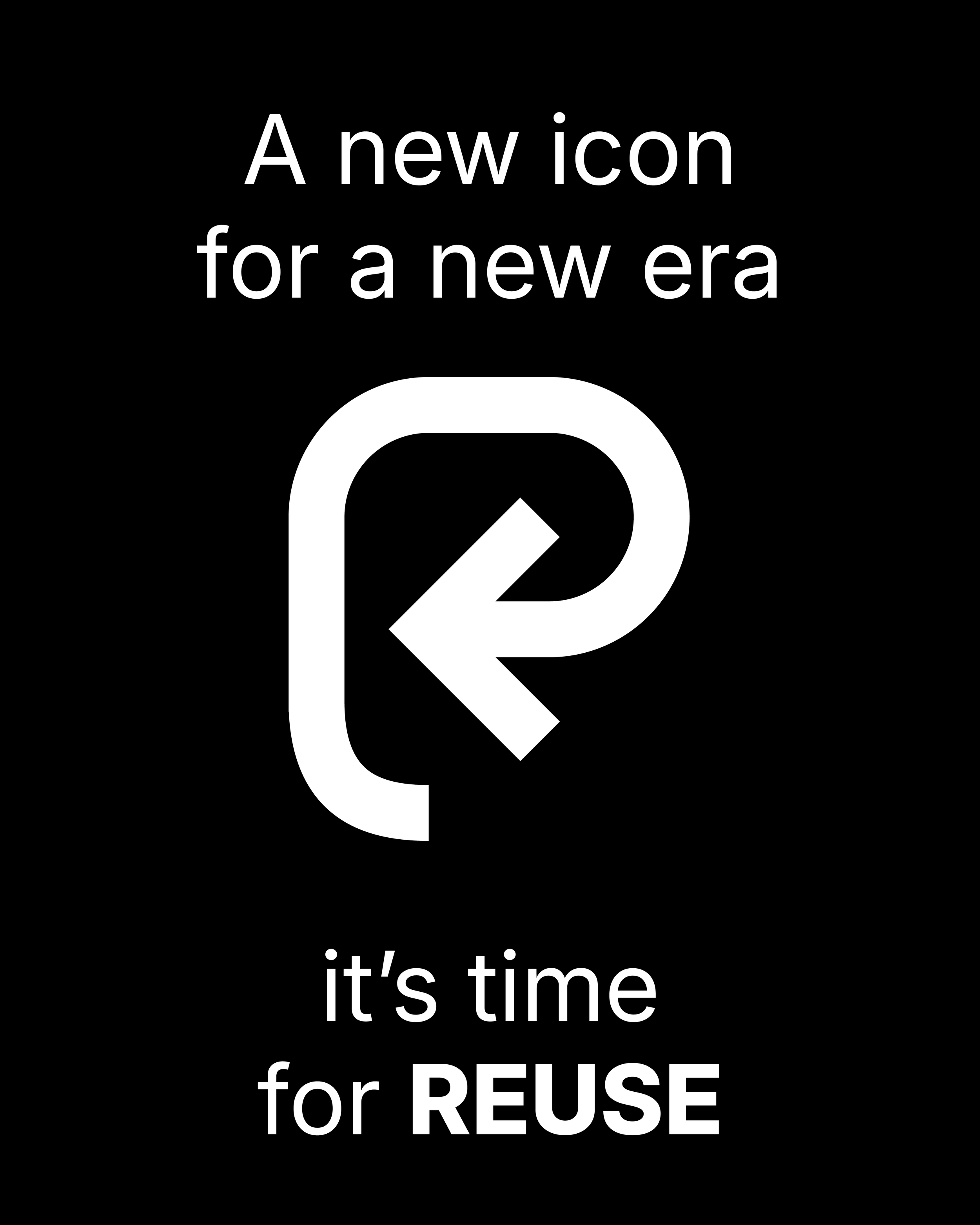
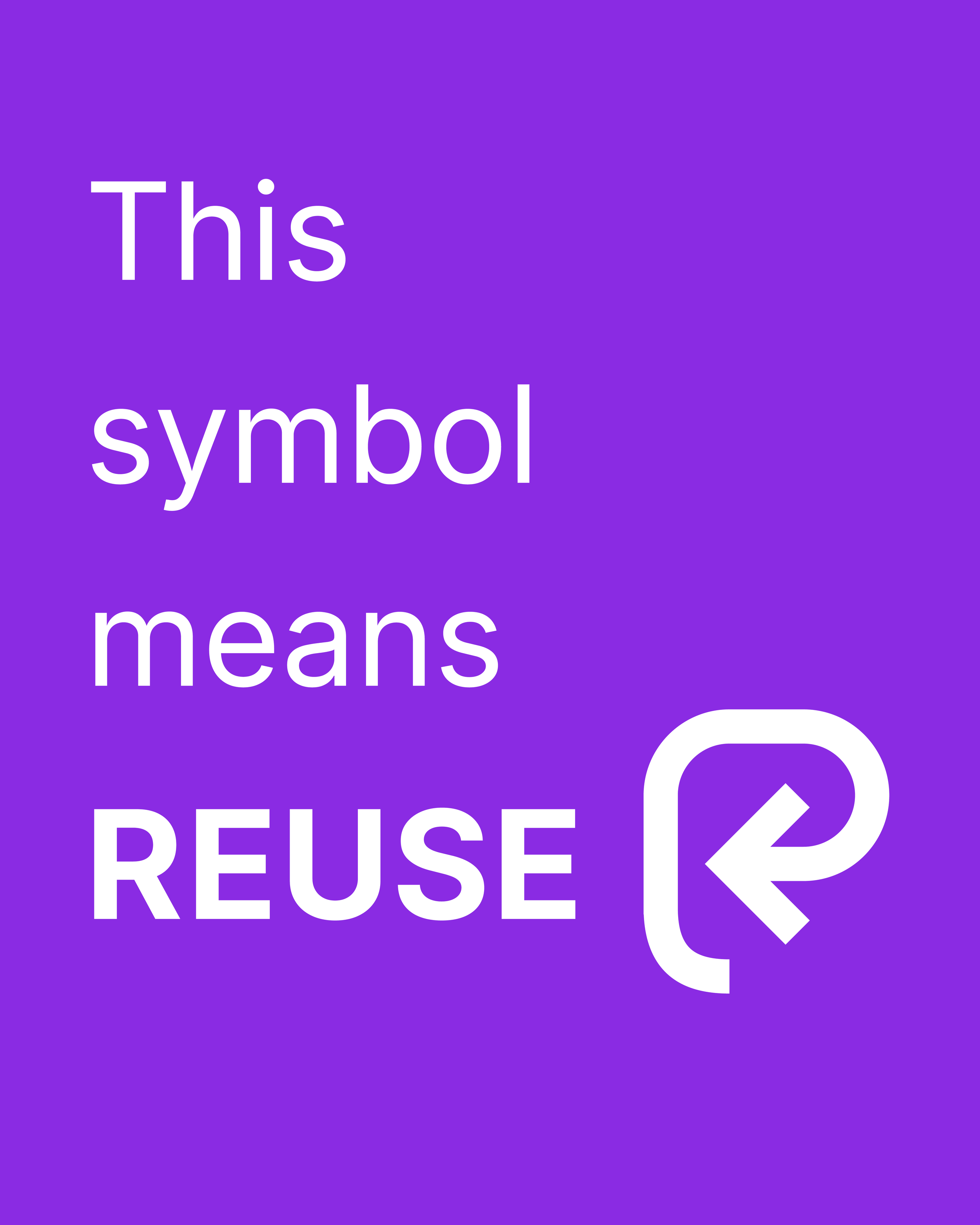
Rather than simply identifying a package as reusable, PR3’s global reuse symbol is intended to communicate that the package is part of a functioning reuse system. The symbol signals that the package should not be discarded or recycled, but instead collected, sanitized and recirculated through an established network.
The symbol is tied to criteria intended to ensure that the package is part of that system, not simply durable enough to be used more than once. Reuse systems are straightforward and simple for consumers. Just place the container/package in a reuse bin and you can be confident it will be sanitized properly.
By linking the symbol to system-wide criteria rather than a product attribute alone, PR3 hopes to avoid the disconnect that has challenged other environmental symbols. That distinction could help organizations communicate reuse more consistently while giving consumers clearer direction about what to do with a package after use.

The purple symbol may be simple, but the infrastructure and standards behind it are not.
“A picture does tell a thousand words. The new industry is constantly, I mean constantly, conflated with recycling.”
— AMY LARKIN, PR3 CO-FOUNDER AND DIRECTOR
Reuse Is a System, Not a Product Attribute
PR3's criteria require eligible packaging to be durable enough to complete a minimum number of use cycles and to participate in a system designed to achieve those cycles. The system must be able to collect, wash, and recirculate the packaging.
You cannot have a product that has the reuse symbol on it if it doesn’t have a system behind it.”
- Amy Larkin, PR3 Co-founder and Director
For companies that want to describe packaging as reusable but lack return infrastructure, Larkin’s message was direct: “Don’t market something as reusable.” The system has to exist first.
That may be one of the symbol’s most important contributions. It shifts the conversation from “Could this package theoretically be reused?” to “This package is operating within a system that will actually reuse it.”
Building an International Framework for Reuse
PR3 was founded in 2019 to develop standards for a reuse industry that was still in its earliest stages. The organization convened a panel of more than 80 global participants representing multinational companies, reuse entrepreneurs, scientists, governments, environmental justice advocates, consumer and worker organizations, and informal waste workers. Unlike many standards-development panels that are primarily industry-led, PR3's panel was intentionally structured to include both industry and civil society.
To support that goal, PR3 partnered with the Canadian Standards Association (CSA) on binational standards development and, through its parent organization RESOLVE, became an accredited standards developer through the American National Standards Institute (ANSI).
“Standards were essential for interoperability, for scalability, for profitability, for environmental performance, all of it.”
- Amy Larkin, PR3 Co-founder and Director
Today, PR3's work addresses six interconnected parts of a reusable packaging system:
Washing
Container design
Collection points
Marking and labeling
Digital systems
System operations and performance
Together, these standards are intended to support interoperability, the ability for containers, return points, wash facilities, data systems, brands and service providers to work together across a shared reuse system.
That does not mean every reusable container must be the same size or shape. Instead, the standards establish performance criteria that allow systems to function safely and effectively while accommodating different packaging formats. For example, the container standard addresses design features that can affect washing and sanitization, while the system operations and performance standard creates more consistent ways to measure environmental performance, economics, return rates, waste diversion and other outcomes.
As Larkin described the current challenge, comparing reuse systems today can feel like comparing “apples to kumquats.” A more consistent framework could help companies, governments and institutions evaluate reuse systems using comparable information.
The need for consistency becomes even more important as reuse programs expand across markets. Local requirements may affect washing, labeling, food safety, return infrastructure and container design, while some countries have standards covering only individual parts of a reuse system. PR3 describes its standards as the only international framework designed to address the reusable packaging system as a whole, connecting these individual components through a common approach to interoperability.
During development, PR3 and its Standards Panel reviewed existing standards and regulations to avoid duplication or conflict. Companies remain responsible for ensuring their reuse programs comply with applicable local requirements, but the standards can provide multinational organizations with a common operational foundation while allowing systems to adapt to regional regulations.
Okie noted that trademark protection gives PR3 an enforcement mechanism that many environmental symbols lack. Ultimately, PR3 will have control of the symbol and will have legal power to stop any incorrect usage.
That legal structure is intended to help keep the symbol connected to its criteria, ensuring it continues to represent participation in a functioning reuse system and preserving a consistent meaning for businesses and consumers alike.
Making Reuse Visible Across the System
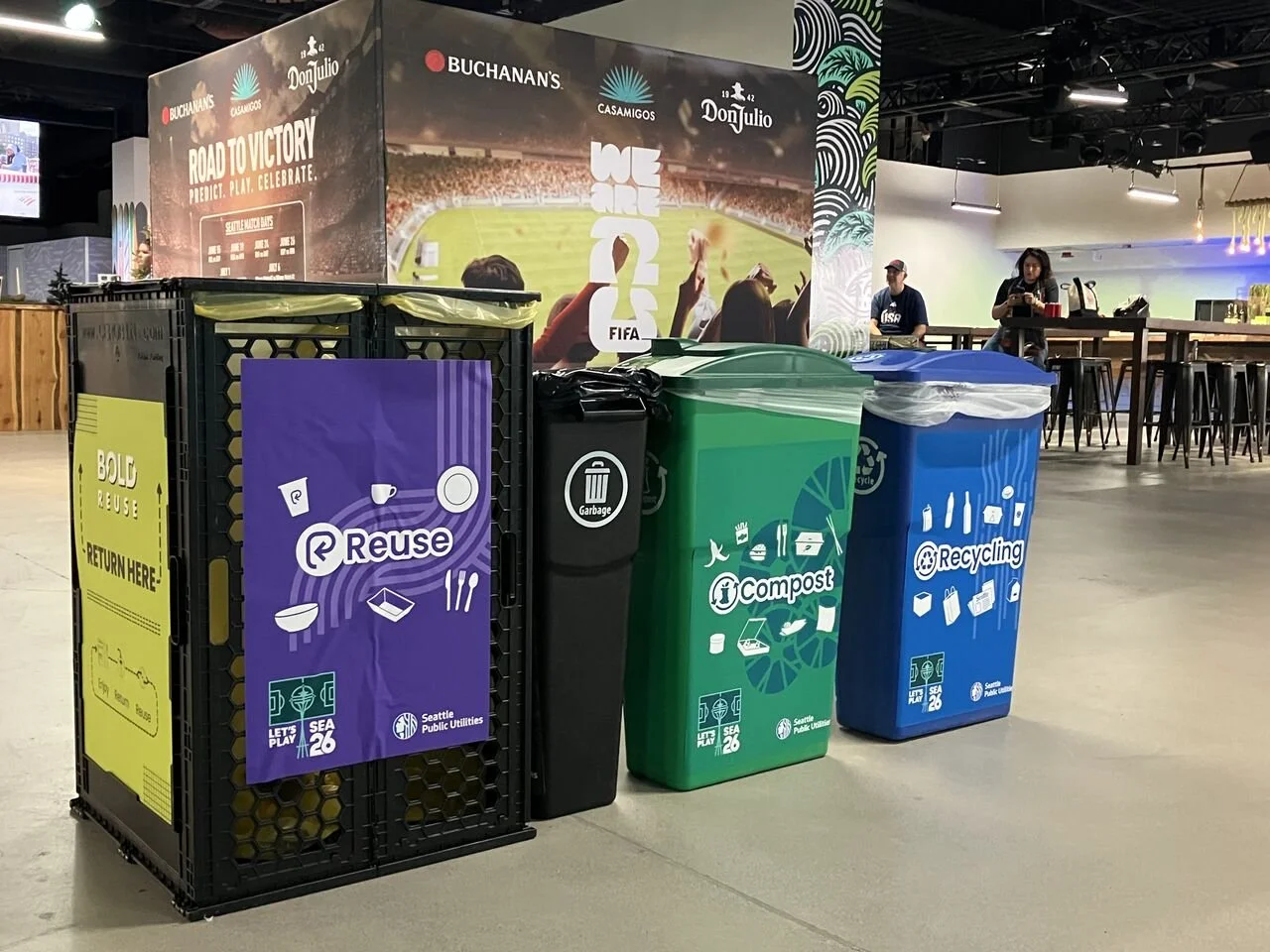
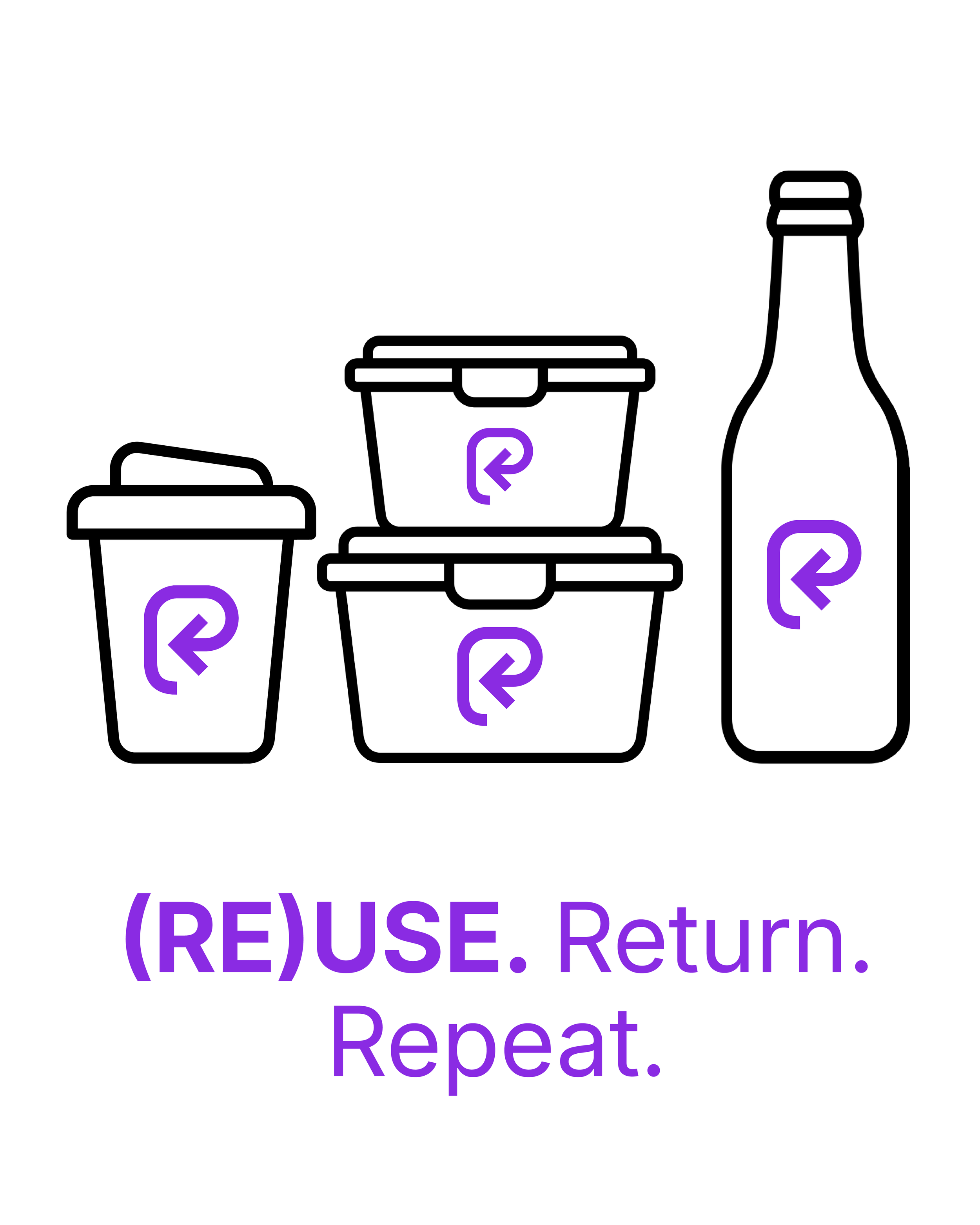
A reusable container is unlikely to be returned successfully if people do not understand where it belongs. PR3's global reuse symbol is intended to appear not only on packaging, but throughout the reuse system, including collection points, signage and other consumer touchpoints. That repetition creates a visual bridge between the package and the infrastructure responsible for collecting, sanitizing and recirculating it.
PR3 recommends pairing the symbol with the word “reuse” or another clear descriptive term. As awareness grows, that consistent visual language can help consumers understand that the package should be returned rather than discarded.
“They’re not just doing all the Starbucks or all the McDonald’s. They’re doing different retailers so that you can drop your cup wherever."
- Amy Larkin, PR3 Co-founder and Director

Retailers play a critical role in reinforcing that message. Beyond distributing reusable packaging, they may host collection points, communicate with consumers and provide the physical infrastructure that connects a product to its return system. PR3 encourages retailers supporting or enabling reuse programs to use the symbol consistently across the entire experience, including:
Reusable containers
Collection bins
Return infrastructure
Store signage
Consumer instructions
Marketing and educational materials
Using the same symbol across these touchpoints helps consumers connect the package in their hand with the place where it should be returned. It also reinforces that reuse is not limited to a single brand, retailer or service provider, it is part of a broader, interconnected system.
Shared infrastructure becomes especially important when multiple retailers or brands participate. People are more likely to return a container when there are several convenient return locations, rather than only the business where it was originally received.
Okie described the symbol as a “beacon,” an indicator that people should have a different relationship with the package.
Over time, someone who learns to recognize the symbol at a stadium, university or café could encounter it in another city or country and understand that the item should be placed in the reuse bin. As reuse systems expand across brands, institutions and geographic boundaries, that shared visual language has the potential to make participation more intuitive and consistent.
To help preserve that meaning, organizations currently review and agree to PR3's criteria before downloading the symbol. While that process largely operates through an honor system, PR3 has registered the mark as a certification mark in the United States and is pursuing additional trademark protections internationally. The organization also maintains a public reporting form through which suspected misuse can be identified.

“This is different than recycling. This is different than waste management.”
- SUZ OKIE, PR3 REBRAND REUSE LEAD
How the Symbol Fits Into EPR
Extended Producer Responsibility programs are also creating new reasons for producers, retailers and packaging companies to consider reuse.
PR3's standards and reuse symbol are not currently written directly into EPR laws. However, some EPR programs include reuse targets, funding for reuse infrastructure or exemptions for packaging that qualifies as reusable.
Depending on the jurisdiction, producers may pursue reuse to:
• Reduce the amount of single-use packaging they place on the market
• Lower EPR fees
• Qualify packaging for an exemption
• Contribute toward reuse or waste-reduction targets
• Support broader packaging-reduction commitments
PR3 encourages producers developing reuse solutions to use its standards as a resource.
A common standards framework may help systems remain interoperable as they expand within EPR states and across state or national boundaries. The symbol can then provide consumers with a consistent visual instruction even when the regulatory context differs.
Whether reusable packaging is included on an EPR covered-materials list or exempt from program requirements varies by jurisdiction. Regardless of its regulatory classification, PR3's position is that a reusable system meeting the symbol's criteria should use the symbol.
PR3 also maintains working relationships across the packaging and producer community, including with producer responsibility organizations and program administrators. Producer organizations have participated in the standards-development process and support the alignment those standards are intended to enable
For companies, this means reuse should not be treated as a separate conversation from EPR compliance and packaging strategy. Decisions about packaging formats, infrastructure, labeling and consumer participation may increasingly need to be evaluated together.
Why Closed-Loop Environments Are Leading the Way
Reuse systems are gaining traction first in environments where organizations can control distribution, collection and return behavior. “In most places, reuse is being introduced first in closed-loop systems. Stadiums, school systems, corporate campuses, arenas, theaters,” said Larkin.
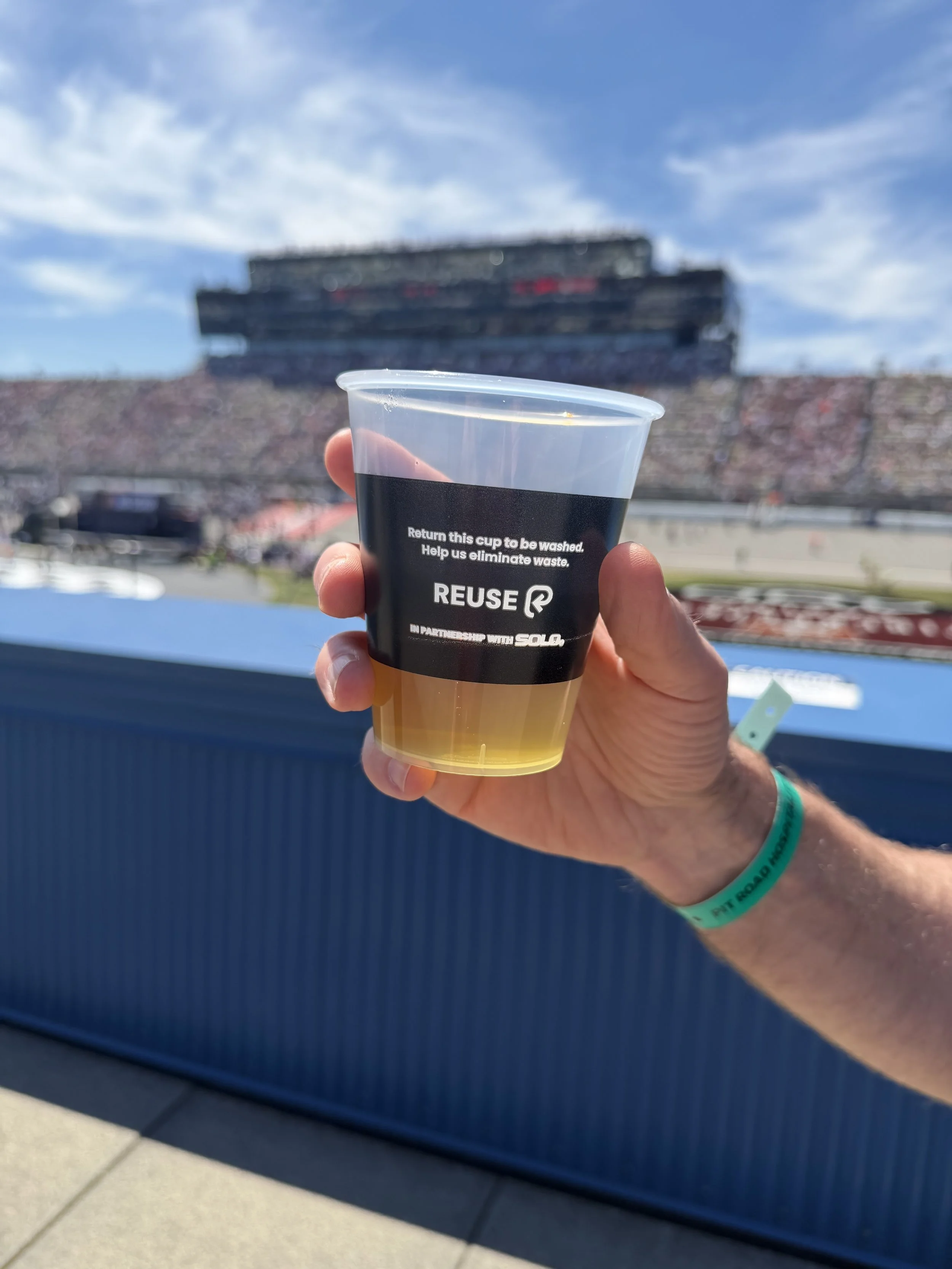
Stadiums, universities, school systems, corporate campuses, hospitals, entertainment venues and similar institutions offer several advantages:
A defined population of users
Predictable packaging volumes
Concentrated collection points
Existing food-service or facility operations
The ability to introduce consistent signage and education
High potential return rates
These institutions can provide the anchor volume necessary to support collection routes, washing capacity and reuse-service businesses. Once that foundation exists, infrastructure may become more economical to extend to nearby restaurants, retailers or business districts.
Larkin described this as a form of place-based economic development: large institutions can provide the initial “ballast” needed to support an emerging local reuse industry.
This makes closed-loop facilities particularly relevant for public agencies, colleges and universities, healthcare systems, venue operators and corporate campuses exploring ways to reduce disposable packaging.
Policy may support expansion beyond these closed environments. In states with bottle bills, EPR requirements or specific reuse targets, producers and retailers may have stronger incentives to invest in broader reuse systems.
Building Awareness From the Ground Up
The reuse symbol will only become meaningful if people encounter it repeatedly and receive clear instructions about what it represents. PR3 is approaching consumer education in three primary ways.
First, the organization is working directly with reuse service providers around the world as they adopt the symbol. This connects the mark to reuse systems that people are already using in their communities.
Second, PR3 is educating professionals within the circular economy, packaging and reuse sectors through speaking engagements, partnerships and community participation. Building recognition among the organizations designing and implementing systems can help make symbol use more consistent from the outset.
Third, PR3 is conducting media and social outreach intended to introduce the symbol to audiences beyond the existing reuse community.
For organizations launching programs, this broader education does not replace local communication. Collection bins, signs and packaging still need clear instructions. Employees and vendors need training. Program operators need to explain deposits, return locations or participation requirements. The symbol creates consistency, but each system must make the desired action easy to understand.
What the Symbol Is Intended to Convey
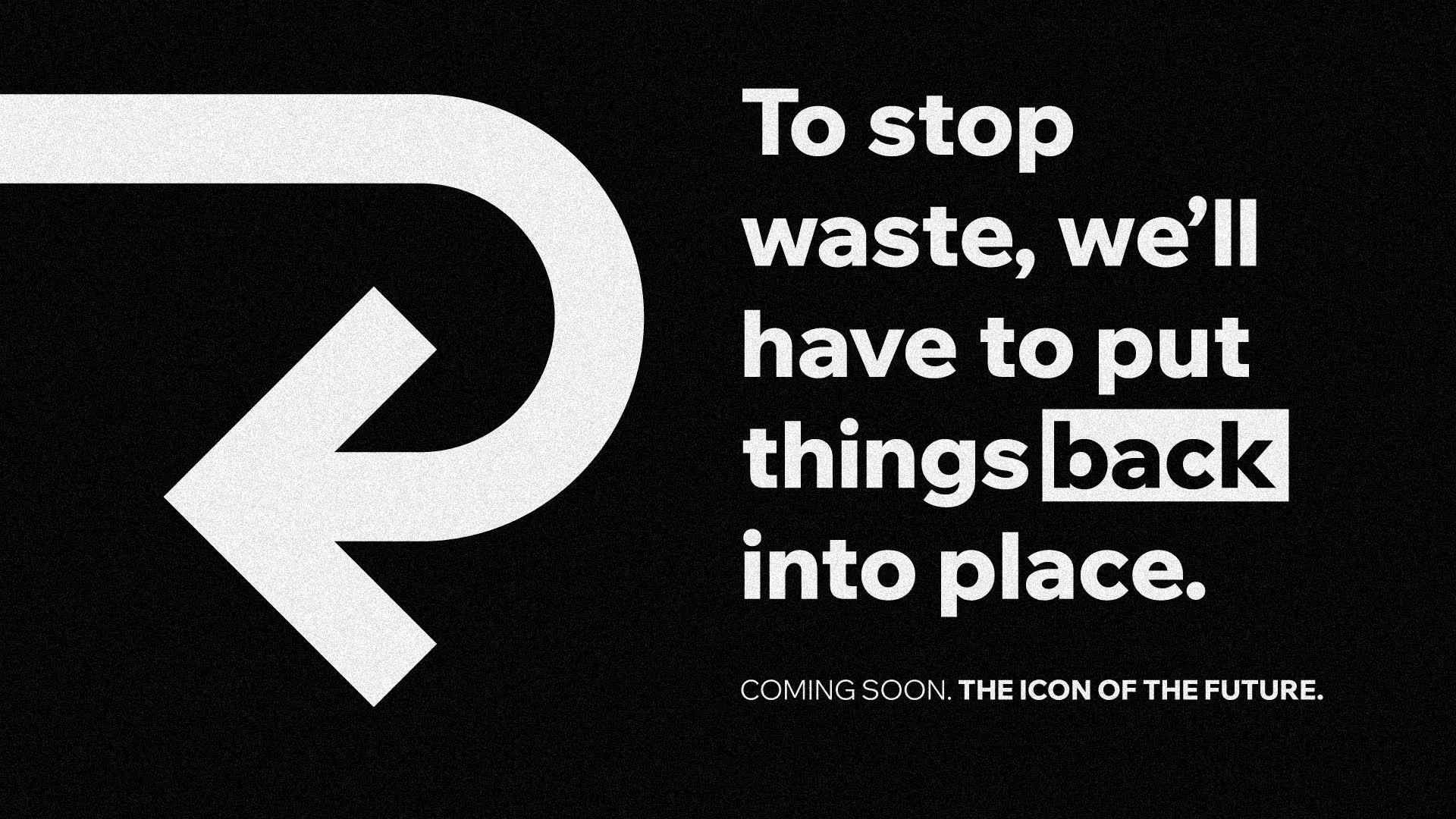
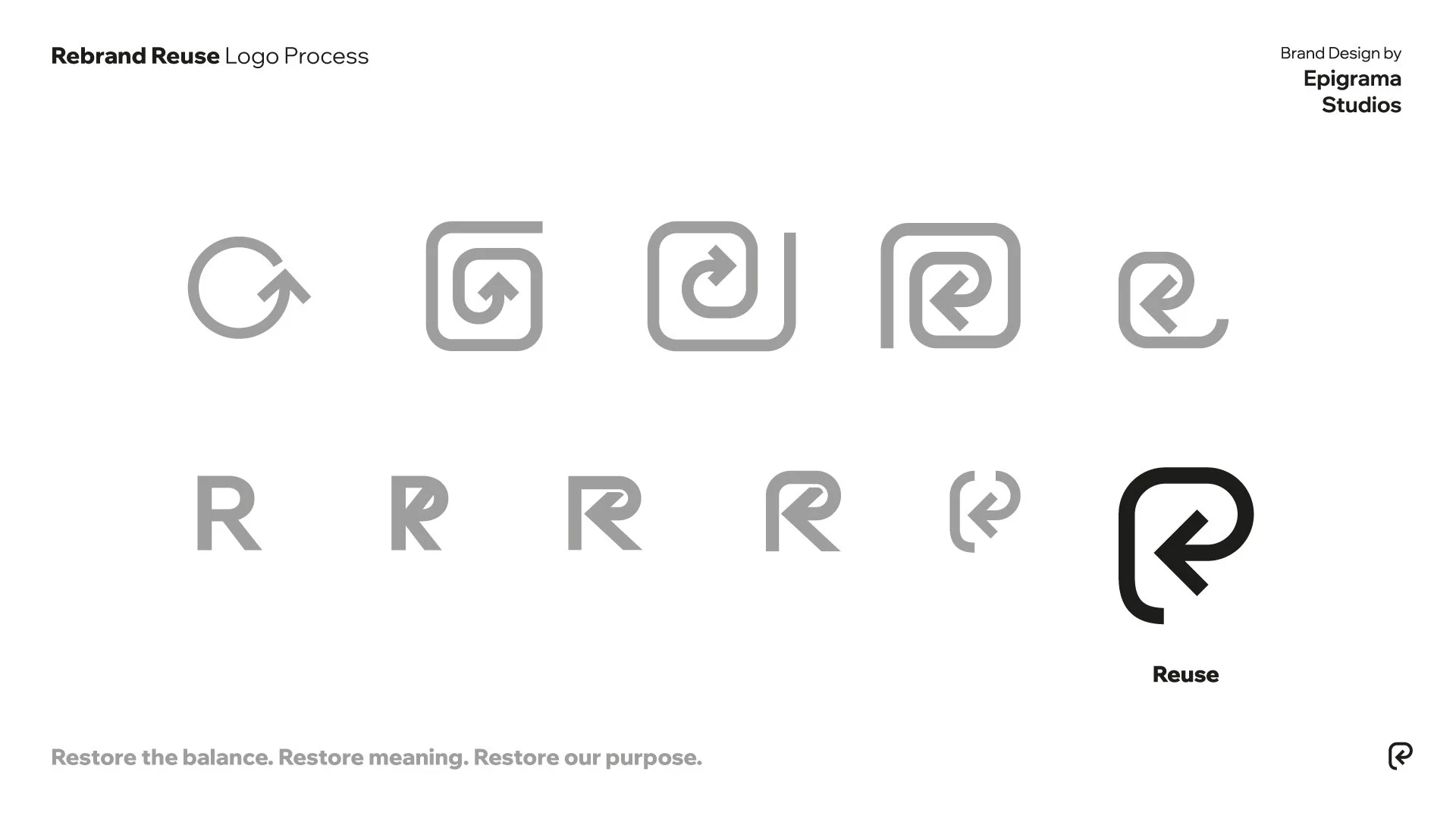
The reuse symbol was designed by Epigrama Studios, a design firm based in Colombia.
According to PR3, the design represents several connected ideas:
Returning to balance
Bending a linear path back into a circular system
The letter “R”
Movement from disposal toward continued use
The result is intended to communicate circularity without replicating the visual language of recycling.
Purple was selected by the PR3 Standards Panel because it is less commonly associated with recycling, composting or other waste streams around the world.
The PR3 Marking and Labeling Standard recommends purple for reuse systems and the reuse symbol, but the color is not required in every application. This flexibility may help organizations apply the symbol to different materials and packaging formats while retaining its recognizable shape.
Planning a Reuse Initiative?
Reuse is not simply a packaging substitution. It is an operational and behavioral system involving procurement, logistics, collection, washing, health and safety, data, communications and performance measurement. Organizations considering reuse should evaluate how reusable packaging fits within their operations, infrastructure, consumer experience and broader policy objectives before launching a program.
Whether you're a brand, retailer, institution or public agency, RRS can help you ask the right questions early to identify opportunities, uncover implementation challenges and build a stronger reuse system from the start.
Get the worksheet
Download our one-page planning worksheet to help answer the operational, infrastructure and policy questions organizations need to prepare for an investment in reusable packaging. We’ll also email you a copy for sharing with colleagues!
More Than a Mark on a Package
The reuse symbol is ultimately a communications tool. Its long-term value will depend on the systems, standards and consumer experiences supporting it.
But symbols can help normalize new behavior. They can make an unfamiliar process visible, repeatable and easier to understand. For Larkin, the symbol represents something larger than a packaging instruction.
Reuse will require coordination among brands, retailers, governments, institutions, entrepreneurs, workers, consumers and service providers. Standards cannot eliminate that complexity, but they can give those participants a shared foundation.
The opportunity for organizations is not simply to place a new symbol on a cup. It is to help build a system worthy of the symbol.
“This symbol represents good intention, good collaboration and solving a whole bunch of problems.”
— AMY LARKIN, PR3 CO-FOUNDER AND DIRECTOR
Explore Reuse Opportunities With RRS
RRS helps public agencies, institutions, businesses and collaborative partnerships design practical, scalable solutions that advance circular economy goals. From evaluating materials management systems and engaging stakeholders to assessing infrastructure needs and developing implementation strategies, we help organizations build reuse systems that work.
For organizations evaluating reusable packaging, RRS can help navigate the operational, policy, infrastructure and communication considerations needed to move from a reusable product to a functioning reuse system. We also help clients evaluate how reuse can support Extended Producer Responsibility (EPR) compliance, packaging optimization and long-term sustainability goals.
Connect with RRS to explore where reuse may fit into your facility, community, packaging portfolio, EPR strategy or regional materials management plan.